Low-Code vs Custom Development: 7 Key Differences That Matter
The debate around low-code vs traditional development is no longer confined to IT. It's a boardroom decision impacting operational speed, capital allocation, scalability, risk, and long-term control. How you build software determines not just how fast it launches — but how it evolves, integrates, and performs over time.
Low-code platforms prioritize rapid delivery with minimal coding. Custom development delivers full control, tailored functionality, and architectural ownership. Both solve business problems, but under very different economic models and long-term constraints.
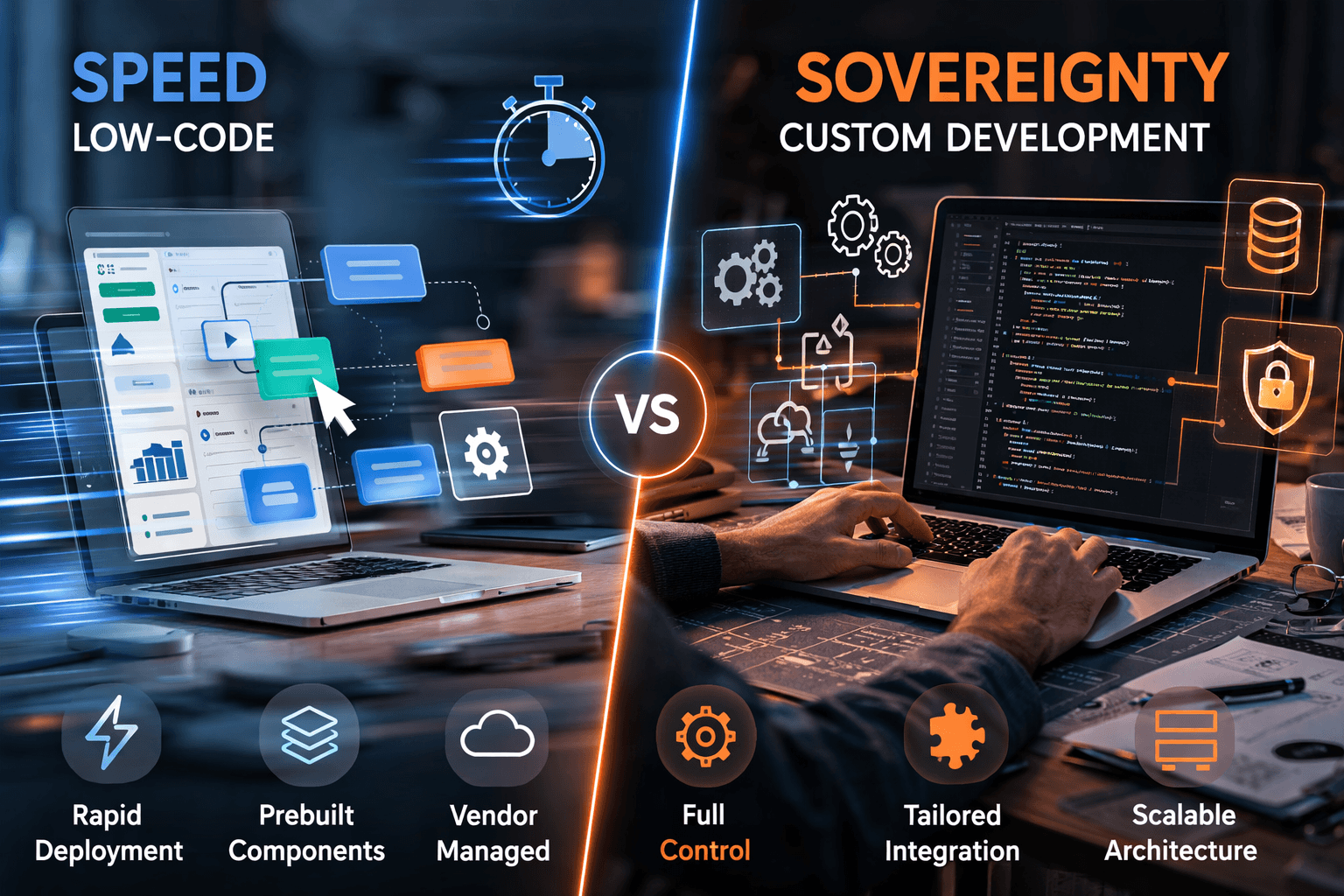
The Fundamental Divide: Speed vs Sovereignty
At its core, the distinction is acceleration versus ownership.
Low-code uses visual builders and preconfigured components, with infrastructure and updates managed by the vendor. This reduces engineering demand and speeds deployment.
Custom development requires code built from the ground up. Architecture, security, integrations, and performance must be intentionally engineered. It takes longer — but provides full control over how the system operates and scales.
Low-code maximizes immediate speed. Custom development maximizes long-term sovereignty — a difference that becomes more significant as organizations grow.
1. Time-to-Market: Speed vs Structural Durability
Low-Code
Speed is the advantage. Internal dashboards, workflow tools, approval systems, and MVPs can often launch in weeks instead of months. Business teams can even contribute directly, reducing engineering backlog.
Low-code is especially effective for:
- MVP validation
- Internal process automation
- Rapid experimentation
- Departmental efficiency tools
Faster launches mean quicker feedback, earlier revenue testing, and shorter innovation cycles.
Custom
Takes longer due to planning, architecture design, and testing. But that slower process builds durability — which matters when software directly impacts revenue, customer experience, or compliance.
Low-code wins early speed. Custom development wins long-term stability.
2. Cost: Upfront Savings vs Long-Term Economics
Low-Code
In year one, typically costs less. Reduces engineering needs, shortens development cycles, replaces capital expense with subscription pricing. However, long-term costs expand through:
- Per-user licensing
- Premium features
- API limits
- Storage upgrades
As usage grows, so does spend.
Custom
Requires higher upfront investment but avoids recurring platform licensing. Ongoing costs (hosting, maintenance, updates) are more controllable and not tied to vendor pricing tiers. Over a multi-year horizon, total cost of ownership often narrows — and sometimes favors custom solutions.
3. Flexibility: Guardrails vs Full Control
Low-Code
Operates within structured frameworks. Works well when processes are predictable and customization needs are limited. Ideal when:
- Workflows are standardized
- UX differentiation is minimal
- Data models are straightforward
Challenges arise when business logic becomes complex or highly customized.
Custom
Removes these limits. Architecture, data models, and user experience can be built around exact business requirements. This enables:
- Full customization
- Independent feature evolution
- Tailored security controls
Low-code is efficient within boundaries. Custom development adapts beyond them.
4. Scalability: Managed Growth vs Engineered Expansion
Low-Code
Scales well within vendor infrastructure. Uptime, storage, and performance are managed externally, reducing operational complexity. But enterprise growth can expose limits:
- API rate caps
- Pricing tier escalation
- Hosting restrictions
Custom
Can be architected for scale using cloud-native infrastructure, microservices, and performance optimization strategies.
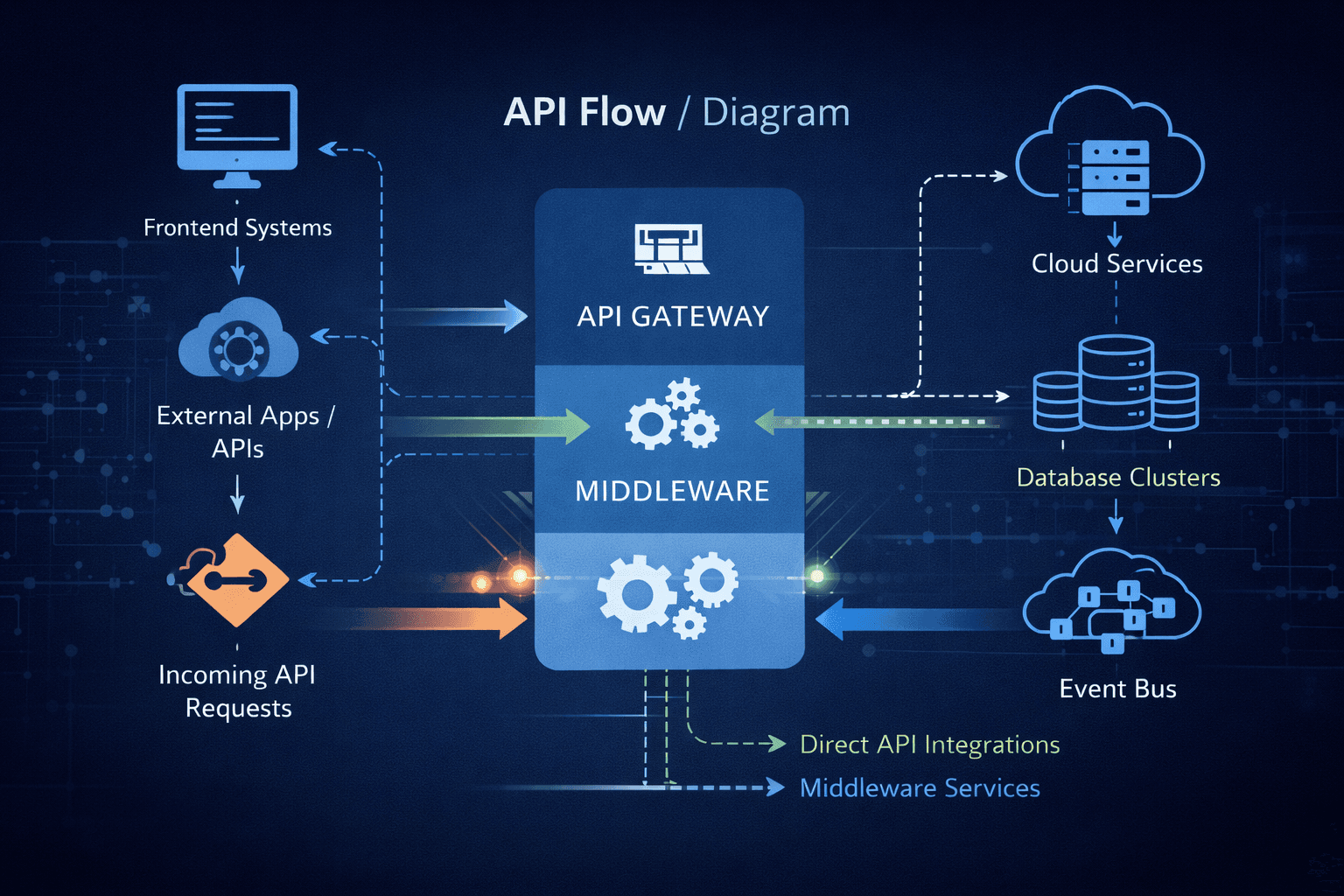
Low-code handles operational growth. Custom development enables architectural scale.
5. Integration Depth: Connectors vs Custom Ecosystems
Low-Code
Offers prebuilt connectors to common systems like ERPs and CRMs. Simplifies integration for standard use cases. However, complex environments may require:
- Real-time synchronization
- Event-driven architecture
- Advanced data transformation
Custom
Enables direct API engineering and tailored middleware — improving reliability and performance in multi-system environments. If integration complexity is high, custom solutions provide greater control.
6. Security and Compliance: Vendor Protection vs Defined Governance
Low-Code
Vendors invest heavily in encryption and compliance certifications. For many internal systems, this is sufficient. Highly regulated industries may require:
- Custom encryption frameworks
- Detailed audit logging
- Strict data residency controls
Custom
Allows governance structures to be designed precisely around regulatory requirements.
Low-code inherits security. Custom defines it.
7. Strategic Control: Tool or Core Asset?
Low-Code
If software supports internal processes or experimentation, delivers strong value with minimal friction.
Custom
If software drives revenue, customer engagement, or competitive differentiation — ownership becomes strategic. Building core systems inside vendor ecosystems introduces dependency risk. Custom development turns software into a proprietary asset.
A Hybrid Reality
Increasingly, organizations adopt a blended approach. Low-code tools may be used for internal HR systems or departmental workflows, while custom development supports customer-facing platforms and core infrastructure. APIs connect both environments, balancing agility with long-term control. This hybrid model allows companies to accelerate experimentation without compromising strategic assets.
Final Assessment
The low-code vs custom development decision is not about identifying a universal winner. It is about aligning technology strategy with business priorities.
Low-code platforms excel in speed, simplicity, and short-term efficiency. They are ideal for internal tools, MVPs, and clearly defined workflows.
Custom software excels in scalability, integration depth, compliance flexibility, and long-term ownership. It becomes particularly valuable when systems are revenue-critical or competitively differentiated.
If your primary objective is agility, low-code provides immediate momentum. If your objective is sovereignty and long-term architectural control, custom development offers a stronger foundation.
In commercial terms, low-code minimizes early friction. Custom development minimizes future constraints.
Not Sure Which Approach Is Right for You?
Whether you need a fast-turnaround low-code solution or a fully custom build, FissionCore helps Vancouver Island businesses make the right call. Let's talk.
Book a Free Consultation