Website Cost in 2026: Real Prices Explained
A website in 2026 costs between $1,000 and $50,000+, depending on complexity, features, and who builds it. Most serious small businesses invest $5,000 to $20,000 for a high-performing, lead-generating site.
The wide range in pricing comes down to strategy, scalability, performance requirements, and long-term goals. Below is a clear breakdown of what drives website costs and what you should realistically budget.
Watch: Website Cost Breakdown for 2026
Website Cost by Type
Website pricing varies dramatically depending on whether you build it yourself, hire a freelancer, or work with an agency. The structure behind the site, the planning process, and long-term scalability all affect the final investment. Choosing the right option depends on how important your website is to your overall business growth.
DIY Website Builders — $200–$800 Per Year
If you use platforms like Wix, Squarespace, or Shopify and build the site yourself, your main costs will be hosting, templates, and a domain name. This is the cheapest option available and can work for very small businesses or early-stage startups testing an idea. However, design flexibility, SEO control, and performance optimization are often limited.
Template-based platforms restrict customization and can make it difficult to differentiate your brand. As your business grows, these platforms can become harder to scale. Many DIY sites struggle with technical SEO, structured data, advanced integrations, and performance tuning.
Shopify Website Cost in 2026
A Shopify website in 2026 typically includes:
- Monthly subscription fees ($39–$399+ per month)
- Transaction fees
- Paid apps and integrations
- Premium themes
- Developer customization (if needed)
While Shopify can be powerful for ecommerce, many growing businesses underestimate the long-term cost once apps, upgrades, and custom features are added.
Freelancer Websites — $1,500–$8,000
Freelancers offer a step up from DIY platforms and are often a solid option for businesses with moderate budgets. You'll typically receive a more customized design, better branding alignment, and some level of SEO setup. That said, freelancer quality varies significantly. Some specialize in visual design but may not focus heavily on conversion optimization or technical SEO architecture.
Another important factor is scalability. As your business grows, you may need integrations, automation, CRM connections, or advanced marketing tools. Not all freelancer builds are structured with long-term expansion in mind. For informational websites or small service businesses, this option can work well. But if your website needs to become a serious growth engine, strategic planning becomes much more important.
Custom Websites — $10,000–$50,000+
Custom websites are designed for businesses that need full flexibility, scalability, and performance. At this level, the website is not just designed — it is strategically engineered.
A fully custom website includes:
- Tailored UI/UX design
- Strategic layout built around messaging and user flow
- Strong SEO foundations
- Core Web Vitals optimization
- Conversion-focused structure
Custom builds are ideal for companies that rely heavily on inbound leads, operate in competitive industries, need advanced integrations, or plan to scale marketing efforts.
Custom vs Low-Code Development
A common question in 2026 is the difference between custom development and low-code platforms (like Webflow, Bubble, or similar tools). Low-code platforms can offer flexibility with faster deployment. However:
- They may have platform limitations
- Scalability can become restricted
- Advanced custom logic may require workarounds
- Long-term ownership and portability may be limited
True custom development provides full control over architecture, performance, integrations, and scalability — which becomes critical for growth-focused businesses.
Cheap vs Professional Website Cost Comparison
One of the biggest pricing misconceptions is assuming a cheaper website provides better value. The real comparison isn't just upfront price — it's long-term return.
Design
Template-based
SEO
Limited SEO architecture
Strategy
Minimal strategy
Cost
Lower upfront cost
Longevity
Often requires rebuild later
Design
Custom strategy
SEO
Performance optimized
Strategy
Conversion focused
Cost
Higher upfront investment
Longevity
Stronger long-term ROI
What Impacts Website Cost in 2026?
Several key factors influence pricing beyond just visual design.
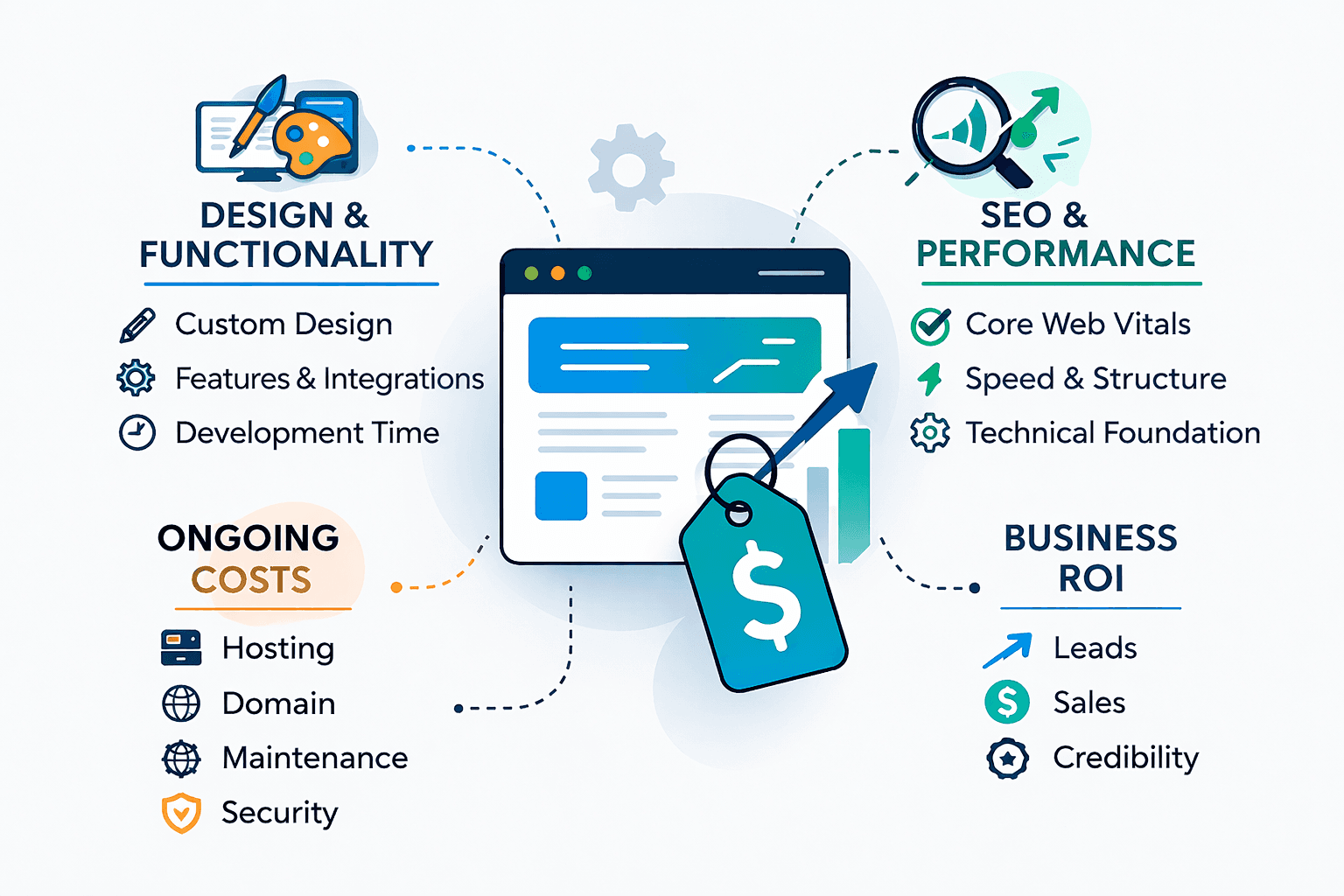
Design, Features & Functionality
Custom design takes more planning and development time than modifying a template. The more unique your layout, user experience, and brand positioning, the more development hours are required.
Features that increase cost include:
- E-commerce functionality
- Booking systems
- Membership portals
- CRM integrations
- Multilingual setups
- Automation workflows
- Custom calculators or tools
Each added feature increases complexity, testing requirements, and development time.
SEO, Performance & Technical Standards
In 2026, performance and SEO are non-negotiable. Google prioritizes fast-loading websites that meet Core Web Vitals standards. Proper site architecture, schema markup, structured navigation, and mobile optimization are critical. Websites built without strong technical foundations often require expensive rebuilds within a few years. Investing in performance and SEO upfront prevents long-term technical debt.
Ongoing operational costs to factor in:
- Hosting
- Domain renewal
- Maintenance
- Security updates
- Plugin or software licenses
A well-built website reduces ongoing technical issues and lowers long-term risk.
Website Redesign Cost in 2026
Many businesses don't need a full rebuild — they need a strategic redesign. Website redesign costs in 2026 typically range between $3,000 and $25,000+, depending on:
- Scope of changes
- Platform limitations
- Technical debt
- Performance upgrades
- SEO restructuring
If the underlying architecture is strong, a redesign can improve conversions and branding without starting from scratch. However, if the foundation is weak, a complete rebuild may be more cost-effective long term.
What Should You Budget?
If your website is simply informational and not tied directly to revenue generation, a lower-tier investment may be reasonable. However, if your website needs to generate consistent leads, sell products, support paid advertising, improve brand authority, or scale with marketing growth, investing strategically upfront produces stronger long-term ROI.
Even small improvements in conversion rate or search visibility can significantly impact revenue over time. Website costs in 2026 vary widely, but the key factor isn't just price — it's purpose. The more central your website is to growth, the more important strategic planning, performance, and scalability become.
Ready to Start a Project?
Whether you're a Victoria startup or an established Island business, let's discuss your goals and build a solution that drives measurable growth.
Contact Us